The age of mass production is quietly giving way to a new paradigm of hyper-individualization, and nowhere is this shift more palpable than in the world of apparel and wearable goods. For decades, consumers have been forced to adapt their bodies to the rigid, standardized sizes dictated by the fashion industry—a system fraught with compromise and frustration. The promise of a perfect fit has always been a siren's call, but the tools to achieve it at scale remained elusive. That is, until now. The convergence of advanced 3D scanning technology, sophisticated data analytics, and on-demand manufacturing is poised to dismantle the archaic sizing chart forever, heralding the true democratization of custom-fit clothing and products for the masses.
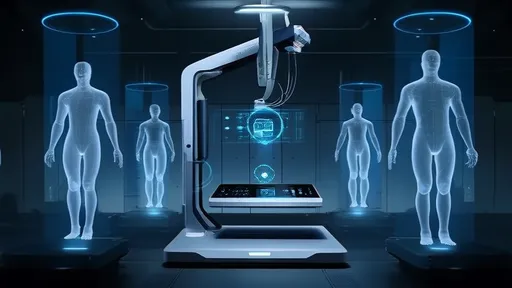
The journey toward this bespoke future begins not in a design studio or a factory, but with the human form itself. High-fidelity 3D body scanning is the critical first step, the gateway to a digital twin of the consumer. Gone are the days of cumbersome measurement tapes and the inevitable human error. Modern scanning solutions are astonishingly accessible. Using nothing more than the sophisticated depth-sensing cameras now ubiquitous in modern smartphones or a quick pass through a dedicated scanning kiosk, a detailed, millimeter-accurate point cloud of a person's body can be captured in mere seconds. This isn't merely a set of circumference measurements; it's a rich, three-dimensional data set comprising hundreds of thousands of points, mapping every contour, curve, and subtle asymmetry of an individual's unique physique.
This raw scan data is then processed by powerful algorithms that translate the complex geometry into actionable and standardized biometric data. Sophisticated software identifies key anatomical landmarks—the nape of the neck, the shoulder notch, the natural waist, the knee—to create a precise digital skeleton. From this, a comprehensive set of measurements is automatically extracted, far exceeding the simple chest-waist-hip paradigm. We're talking about nuanced metrics like shoulder slope, armhole depth, back curvature, and thigh circumference. This digital avatar becomes a true-to-life representation of the user, a key that will unlock perfectly fitting products across a vast spectrum.
The implications of this technological leap are profound, fundamentally reshaping the relationship between brand and consumer. For the first time, individuals possess a secure, portable, and incredibly detailed digital representation of their body. This avatar can be stored in a personal "body vault" or profile, to be used again and again with any brand that participates in this new ecosystem. Imagine shopping for a pair of jeans, a dress shirt, or a winter coat online. Instead of guessing between a 32 or 33-inch waistline or a medium versus a large, you simply grant the retailer permission to access your anonymized body data. Their platform then maps your unique dimensions directly onto their garment patterns in a virtual environment.
This process, known as virtual prototyping or digital draping, allows for real-time customization. The brand's software doesn't just scale a pattern up or down; it intelligently adjusts the cut and shape of the garment to conform exactly to your avatar's proportions. The result is a piece of clothing that is, for all intents and purposes, made for you and you alone. This is the antithesis of mass production—it is production of one, at scale. The consumer is no longer a passive recipient of predetermined sizes but an active co-creator in the process, guaranteeing an outcome they know will fit flawlessly before a single thread is ever cut.
The revolution, however, extends far beyond the realm of fashion. The ability to capture and utilize precise body data is a game-changer for numerous industries. In athletic wear and equipment, performance is inextricably linked to fit. 3D scanning enables the creation of running shoes that match the exact dimensions of a runner's foot, including width, arch height, and volume, reducing injury and enhancing efficiency. Cycling helmets, ski boots, and athletic braces can all be tailored to the individual, maximizing both safety and comfort. The medical field stands to benefit enormously, with the potential for perfectly fitted compression garments, orthotics, and prosthetics, dramatically improving patient outcomes and quality of life. Even furniture and automotive interiors could one day be customized based on the user's anthropometry for optimal ergonomics.
Of course, a transformation of this magnitude does not come without its significant challenges. The foremost concern for most consumers will be data privacy and security. A 3D scan of one's body is arguably one of the most intimate and personally identifiable datasets imaginable. The industry must therefore adopt a paradigm of radical transparency and robust security. Clear, unambiguous consent protocols must be established, giving users complete control over who accesses their data and for what purpose. Anonymization techniques that decouple biometric data from personal identity will be crucial. Trust, not just technology, will be the currency that fuels widespread adoption.
Furthermore, for this model to truly achieve democratic reach, it must be economically viable. The costs associated with the technology—scanning hardware, software development, and flexible manufacturing—continue to fall rapidly. The proliferation of smartphone-based scanning is a major force in driving down barriers to entry. While fully custom items will likely carry a premium over off-the-rack alternatives, the value proposition is undeniable: no more wasted money on clothes that don't fit, reduced returns for retailers, and a product that delivers superior comfort, aesthetics, and longevity. The economics are poised to shift from volume-based to value-based.
Looking ahead, the integration of this body data with other emerging technologies paints an even more exciting picture. Imagine your body avatar interacting with augmented reality fitting rooms, allowing you to see how a custom-designed garment will look and move on your exact body before you buy it. As artificial intelligence and machine learning mature, these systems will not only fit to our bodies but will also learn our style preferences, suggesting designs, fabrics, and cuts that align with our tastes, effectively acting as a personal digital tailor.
We are standing at the precipice of a monumental shift in how we define and achieve the perfect fit. The next stage of customization is not about offering more sizes; it's about moving beyond the concept of sizes altogether. It is a future where our products adapt to us, not the other way around. By harnessing the power of 3D body data, we are unlocking a new era of consumer empowerment, where perfect fit is not a luxury for the few, but a standard for all. The tools are here, and the revolution in fit is finally within reach.

By /Aug 27, 2025

By /Aug 27, 2025

By /Aug 27, 2025

By /Aug 27, 2025
By /Aug 27, 2025

By /Aug 27, 2025

By /Aug 27, 2025
By /Aug 27, 2025

By /Aug 27, 2025

By /Aug 27, 2025

By /Aug 27, 2025

By /Aug 27, 2025

By /Aug 27, 2025

By /Aug 27, 2025

By /Aug 27, 2025

By /Aug 27, 2025

By /Aug 27, 2025

By /Aug 27, 2025

By /Aug 27, 2025

By /Aug 27, 2025
