In the world of high jewelry, a fascinating evolution is taking place—one where the static nature of adornment is being challenged by designs that pulse with dynamic energy. This movement, often described as "architectural jewelry," draws inspiration from the principles of structural engineering, spatial dynamics, and kinetic art to create pieces that appear to be in motion even when at rest. The concept revolves around manipulating form, balance, and material to evoke a sense of fluidity, tension, or transformation, turning wearers into living galleries of kinetic expression.
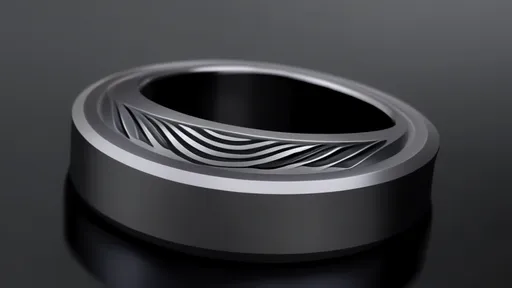
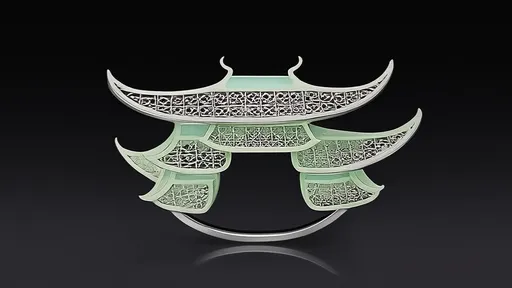
At the heart of architectural jewelry lies the deliberate use of geometric constructs. Designers are increasingly employing sharp angles, overlapping planes, and asymmetrical arrangements to suggest movement. A necklace might feature interlocking triangles that seem to shift against each other with every turn of the wearer’s neck, while a ring could incorporate tilted bands that create an illusion of spinning. These forms are not random; they are carefully calculated to engage the eye, leading it along paths that mimic motion, much like a sculptor guiding a viewer’s gaze around a twisting marble figure.
Material selection plays a pivotal role in enhancing this dynamism. Titanium, for instance, is favored for its lightness and strength, allowing for larger, more daring structures that appear to float around the body. Meanwhile, the use of flexible materials like mesh metals or woven gold introduces actual movement, with pieces that contract and expand with the wearer’s gestures. Even rigid materials such as platinum or diamonds are manipulated through advanced techniques like micro-setting or laser cutting to reduce visual weight, creating designs that seem to defy gravity.
The interplay of light and shadow is another critical tool. By incorporating openwork patterns, layered elements, or strategically placed voids, designers craft pieces that change character under different lighting conditions. A bracelet might cast intricate shadows that dance across the skin, while a pair of earrings could feature hidden facets that catch light only when the wearer moves, producing a shimmering effect akin to motion blur. This choreography of light not only adds depth but also creates a temporal dimension, making the jewelry feel alive.
Balance and weight distribution are engineered to perfection to achieve kinetic illusions. Some pieces employ counterweights or pivoting mechanisms that allow components to swing gently with the body’s motion, like a pendant that rotates to reveal different aspects of its design. Others use tension settings—where stones appear suspended between metal frames—to create a sense of precariousness, as if the gemstones are forever on the verge of movement. This careful calibration ensures that the jewelry interacts with the wearer’s anatomy, transforming static items into responsive companions.
Color and texture further contribute to the perception of dynamism. Gradients of gemstones, from deep sapphire to pale aquamarine, can simulate flowing water or shifting skies, while brushed versus polished metal surfaces create visual rhythms that suggest speed or rotation. Enamel work, with its fluid patterns and vibrant hues, often mimics the organic spontaneity of paint in motion, adding an artistic flourish that feels both spontaneous and structured.
Beyond aesthetics, this architectural approach often carries symbolic weight. Designers might draw inspiration from natural phenomena—whirlpools, wind-swept dunes, or celestial orbits—to infuse pieces with narratives of perpetual motion. This storytelling aspect resonates deeply with wearers, who see their jewelry not merely as ornaments but as embodiments of energy, change, or resilience. In an era where personal expression is paramount, such pieces become extensions of identity, capturing moments of fluidity in a rigid world.
The technical mastery behind these creations cannot be overstated. Artisans employ techniques borrowed from architecture and engineering, such as 3D modeling and finite element analysis, to test how designs will behave when worn. This fusion of traditional craftsmanship and modern technology ensures that each piece is not only visually striking but also ergonomic and durable. The result is jewelry that feels both innovative and timeless, pushing boundaries while remaining wearable art.
As this trend gains momentum, it challenges conventional notions of jewelry as passive decoration. Instead, it positions adornment as an interactive experience, where the wearer and the piece engage in a silent dialogue of movement. This shift reflects broader cultural currents—our fascination with transformation, our desire for individuality, and our appreciation for designs that marry intellect with emotion. Architectural jewelry, in its quest to imbue static forms with dynamic spirit, ultimately celebrates the beauty of potential energy: the thrilling pause before motion begins.

By /Aug 27, 2025
By /Aug 27, 2025

By /Aug 27, 2025

By /Aug 27, 2025

By /Aug 27, 2025
By /Aug 27, 2025
By /Aug 27, 2025
By /Aug 27, 2025
By /Aug 27, 2025
By /Aug 27, 2025
By /Aug 27, 2025

By /Aug 27, 2025
By /Aug 27, 2025

By /Aug 27, 2025
By /Aug 27, 2025
By /Aug 27, 2025
By /Aug 27, 2025

By /Aug 27, 2025
By /Aug 27, 2025
By /Aug 27, 2025
