The art of Mughal gemstone carving represents one of the most exquisite and spiritually resonant traditions in the history of craftsmanship. Emerging during the reign of the Mughal Empire in the Indian subcontinent, this intricate practice was deeply intertwined with the philosophical and aesthetic principles of miniature painting, creating a unique synthesis of visual and tactile artistry. The gem carvers, or naqqash, were not merely artisans but interpreters of a cultural ethos that prized precision, devotion, and the manifestation of divine beauty in material form.
At the heart of Mughal gem carving lies the concept of saufa, or purity of intention, which mirrors the spiritual discipline found in miniature painting. Just as the miniaturist would spend hours in meditation before applying brush to paper, the gem carver approached each stone with a sense of reverence and mindfulness. The process began with the selection of the gemstone—often jade, emerald, or rock crystal—which was believed to hold intrinsic spiritual energy. The carver would then study the stone’s natural flaws and inclusions, not as imperfections, but as guides to revealing its hidden narrative, much like a painter contemplating the blank page.
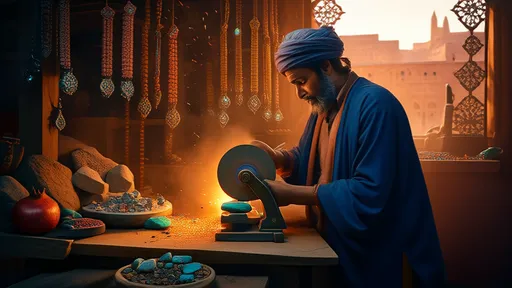
The tools used in Mughal gem carving were simple yet required immense skill: bow-driven lathes, diamond-tipped drills, and abrasives made from crushed gem dust. Despite their rudimentary nature, these instruments allowed artisans to achieve a level of detail that rivaled the finest brushstrokes of miniature paintings. The carving technique involved a slow, deliberate process of grinding and polishing, often taking months or even years for a single piece. This painstaking approach was not just about technical mastery; it was a form of sadhana, or spiritual practice, where the carver’s patience and concentration were as important as their physical dexterity.
One of the most striking ways Mughal gem carving embodies the spirit of miniature painting is through its narrative depth. Miniature paintings often depicted scenes from Persian and Indian epics, courtly life, or mystical themes, capturing moments of emotion and drama in a confined space. Similarly, carved gems served as portable narratives, with scenes etched into their surfaces that told stories of love, valor, or divine encounter. For example, a jade dagger handle might feature a meticulously carved hunting scene, complete with flowing robes, straining animals, and landscape details that echo the compositional elegance of a painted miniature.
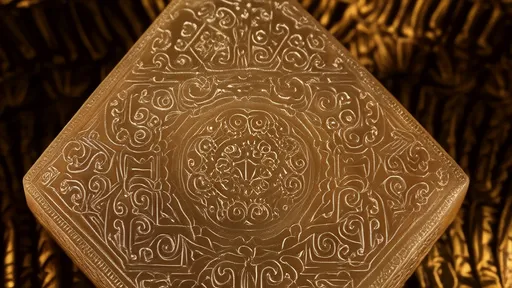
The influence of miniature painting is also evident in the stylistic elements of Mughal gem carving. The use of horror vacui—the fear of empty space—meant that every available surface of the gem was adorned with intricate patterns, floral motifs, or calligraphic inscriptions. This dense ornamentation, reminiscent of the borders and backgrounds in miniatures, created a sense of lush abundance and visual harmony. Moreover, the carvers employed techniques such as undercutting and openwork to achieve a sense of depth and dimensionality, much like the layered perspectives in paintings, where foreground, middle ground, and background interact to create a cohesive whole.
Color played a subtle yet significant role in bridging gem carving and miniature painting. While gems are inherently colored, carvers often enhanced their natural hues through polishing and lighting effects, similar to the way miniaturists used gold leaf and translucent washes to create luminosity. In pieces like the famous Emerald Cup of Jahangir, the green of the stone is exploited to evoke the verdant landscapes common in Mughal paintings, with carved reliefs of flowers and vines that seem to emerge from within the gem itself. This chromatic sensitivity underscores the carver’s ability to "paint" with light and material, transforming the stone into a dynamic canvas.
Beyond aesthetics, the spiritual dimension of Mughal gem carving aligns closely with the ethos of miniature painting. Both arts were seen as means of accessing the divine, with the act of creation being a form of worship. In miniature painting, the depiction of saints, deities, or paradisiacal gardens was intended to inspire devotion and contemplation. Likewise, carved gems often featured religious symbols—such as the mihrab (prayer niche) or verses from the Quran—that transformed the object into a sacred talisman. The repetitive, meditative nature of carving mirrored the rhythmic recitation of prayers, embedding the finished piece with a sense of sanctity.
The legacy of Mughal gem carving is a testament to the enduring dialogue between material and spiritual realms. Today, these artifacts are admired not only for their technical brilliance but also for their ability to convey the profound cultural synthesis that characterized the Mughal era. They stand as miniature monuments to a worldview where art was not separate from life but an integral part of its spiritual fabric. In studying them, we are reminded that true artistry lies not in the mere manipulation of form, but in the pursuit of beauty as a path to the eternal.
By /Aug 27, 2025

By /Aug 27, 2025

By /Aug 27, 2025
By /Aug 27, 2025

By /Aug 27, 2025
By /Aug 27, 2025

By /Aug 27, 2025
By /Aug 27, 2025

By /Aug 27, 2025

By /Aug 27, 2025

By /Aug 27, 2025
By /Aug 27, 2025
By /Aug 27, 2025

By /Aug 27, 2025
By /Aug 27, 2025

By /Aug 27, 2025
By /Aug 27, 2025

By /Aug 27, 2025
By /Aug 27, 2025
By /Aug 27, 2025
