In the intricate world of collectibles, few categories present as compelling a duality as coin jewelry, where the allure of precious metals intersects with the profound weight of history. Each piece tells a dual narrative: one of intrinsic material value, often measured in karats and grams, and another of cultural and chronological significance, measured in stories and centuries. This unique interplay between bullion and background creates a fascinating landscape for collectors, historians, and investors alike, where value is seldom a simple calculation but rather a complex equation of metal, memory, and market desire.
The most immediate, and often the most quantifiable, aspect of a piece of coin jewelry's worth is its composition. Jewelry crafted from gold coins, for instance, carries a base value directly tied to the current market price of gold. This intrinsic value provides a financial floor, a safety net of sorts, ensuring that even if the historical or numismatic premium diminishes, the piece will always be worth the weight of its metal. This aspect appeals to a pragmatic collector, one who views such items as a beautiful, wearable form of bullion—a tangible asset that can be appreciated aesthetically while serving as a hedge against economic fluctuation. The gleam of 22-karat gold or the cool sheen of sterling silver offers a universally recognized and liquid form of wealth.
However, to stop the valuation at the melt value is to overlook the very soul of these objects. The true magic, and the source of their most significant potential appreciation, lies in their history. A coin is a timestamp, a tiny metal disc struck at a specific moment in a nation's narrative. When that coin is then transformed into jewelry—perhaps as a love token, a mourning piece, or a symbol of good fortune—it accrues another layer of human story. A Victorian-era sovereign mounted as a pendant is not merely a gram of gold; it is a relic of the British Empire, possibly carried by a soldier or given as a keepsake. Its value is amplified by its age, rarity, condition, and the story of its issue. A common date sovereign has one value; a rare minting error or a coin from a historically significant year can command a premium exponentially beyond its weight in gold.
This historical premium creates a fascinating tension. The market for coin jewelry is perpetually balanced on a knife's edge between these two value systems. A surge in gold prices can tempt owners to consider melting down pieces to capitalize on the high bullion market. This act, while financially logical from a purely metallic standpoint, is an irreversible destruction of history. Countless pieces of significant numismatic jewelry have been lost to the crucible during gold rushes, making the survivors that much rarer and more valuable. Consequently, the pieces that remain intact often carry a premium precisely because they have survived these periods of temptation, their continued existence a testament to owners who valued their story over a fleeting spike in spot prices.
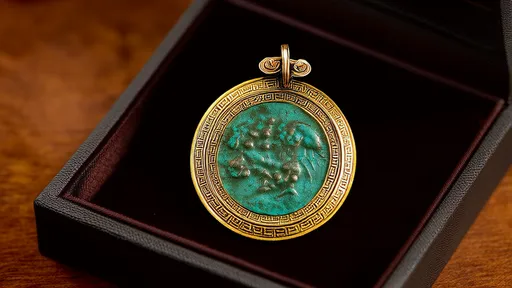
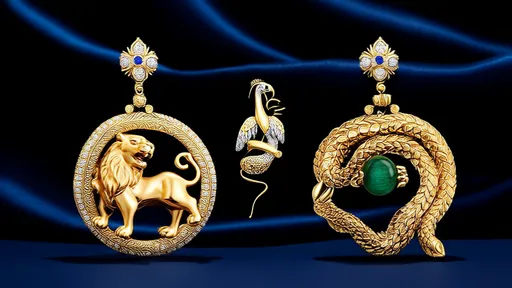
The artistry and craftsmanship of the mounting itself also play a critical role in this valuation dance. A clumsily soldered loop on a rare coin can drastically reduce its value to a serious numismatist, as it damages the original artifact. Conversely, an exquisite, period-appropriate mounting by a renowned jeweler or a unique, folk-art setting can add immense value. It transforms the object from a mere coin on a chain into a holistic piece of wearable art. The setting becomes part of its history. For example, a Classical Greek silver tetradrachm set in a sleek, modern titanium bezel speaks to a contemporary aesthetic, marrying ancient history with modern design. In contrast, the same coin set in an ornate 18th-century gold filigree frame tells a completely different story, one of discovery and appreciation in a bygone era. The mounting contextualizes the coin, and that context is a key driver of desirability and price.
Ultimately, the collection value of coin jewelry resides in a delicate and dynamic equilibrium. It is a perpetual game, a negotiation between the tangible security of precious metal and the intangible allure of a story etched in time. For the astute collector, the greatest treasures are those pieces where this balance is perfected: where the weight of the gold is matched by the weight of its history, and where the craftsmanship of the setting enhances rather than obscures the narrative of the coin. They are not just investments or accessories; they are portable museums, each holding a chapter of our shared human saga, waiting to be read by those who understand that the most valuable things are often those that cannot be melted down.
By /Aug 27, 2025

By /Aug 27, 2025

By /Aug 27, 2025

By /Aug 27, 2025

By /Aug 27, 2025
By /Aug 27, 2025
By /Aug 27, 2025
By /Aug 27, 2025
By /Aug 27, 2025
By /Aug 27, 2025

By /Aug 27, 2025

By /Aug 27, 2025
By /Aug 27, 2025

By /Aug 27, 2025
By /Aug 27, 2025
By /Aug 27, 2025
By /Aug 27, 2025

By /Aug 27, 2025
By /Aug 27, 2025
By /Aug 27, 2025
