In the heart of Rajasthan, the Pink City of Jaipur glows with a legacy that transcends its historic walls and bustling markets. Known globally as the gemstone cutting capital of the world, Jaipur’s relationship with colored gemstones is both an art and an economy, woven into the daily lives of its people. The narrow lanes of the old city, particularly in areas like Johari Bazaar, are where the magic happens—where rough, unassuming stones are transformed into dazzling jewels that find their way into collections and crowns across the world.
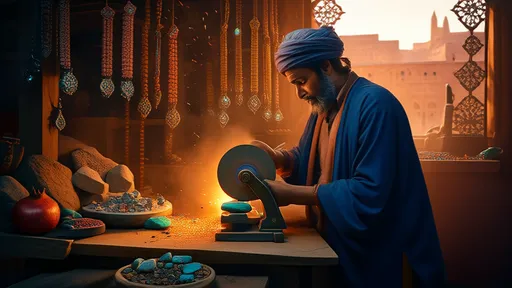
The day in Jaipur’s gem industry begins early, with the first light of dawn filtering into small workshops tucked away in unassuming buildings. Here, master cutters and their apprentices gather around grinding wheels and polishing disks, their hands skilled through generations of knowledge passed down from father to son. The air hums with the sound of machines and the focused silence of artisans at work. For these craftsmen, gem cutting is not merely a job; it is a vocation, a tradition that carries the weight of history and the promise of beauty.
Walking through these workshops, one is immediately struck by the sheer variety of gemstones being shaped and polished. From the deep blues of sapphires and the fiery reds of rubies to the gentle hues of amethysts and the vibrant greens of emeralds, the rainbow of colors is a testament to the global reach of Jaipur’s industry. Much of the rough material is sourced from mines in Africa, South America, and other parts of Asia, arriving in Jaipur to be transformed by hands that understand the unique character of each stone.
The process itself is a meticulous dance between science and art. Before any cutting begins, each rough gem is carefully examined to determine its inherent qualities—the natural inclusions, the color distribution, and the potential for brilliance. The cutter must decide how to best orient the stone to maximize its beauty while minimizing waste. It is a decision that requires experience, intuition, and a deep respect for the material. One wrong move can turn a potential masterpiece into a mere fragment, and so the work proceeds with a calm and practiced precision.
In many workshops, traditional methods still hold sway. Older craftsmen often prefer hand-operated wheels and simple tools, believing that the human touch brings out the soul of the gem. They work by feel and by eye, their movements guided by decades of muscle memory. Yet, alongside these traditions, modern technology has also found a place. Laser cutting machines, computerized design software, and advanced polishing techniques are increasingly used, especially for high-value stones where precision is paramount. This blend of old and new defines Jaipur’s industry—a respect for heritage coupled with an embrace of innovation.
But beyond the technical skill lies a deeper cultural significance. For the people of Jaipur, gemstones are more than just commodities; they are symbols of prosperity, talismans of good fortune, and bearers of meaning. Certain stones are associated with specific planets in Vedic astrology, and wearing them is believed to bring balance and positive energy. This cultural context infuses the work with a sense of purpose that goes beyond mere aesthetics or commerce.
The gem cutting community in Jaipur is tightly knit, often organized around family businesses that have operated for generations. Knowledge is shared within these circles, with young apprentices learning not only the techniques of cutting and polishing but also the nuances of grading, valuing, and trading stones. Trust and reputation are the currencies of this world, and a family’s name is built on the quality of its work and the integrity of its dealings.
However, the industry is not without its challenges. Economic fluctuations, shifts in global demand, and competition from other cutting centers like Thailand and China have forced Jaipur’s artisans to adapt. Many have begun focusing on niche markets, specializing in rare gemstones or custom cuts that require a level of artistry that mass production cannot replicate. There is also a growing emphasis on ethical sourcing and sustainability, as consumers become more conscious of the origins of their gems.
Despite these pressures, the spirit of Jaipur’s gem cutters remains resilient. There is a pride in their work that is palpable—a recognition that they are part of a chain that connects the earth’s hidden treasures to the world’s most cherished adornments. At the end of the day, when the wheels fall silent and the workshops close, the city continues to shimmer with the legacy of its craft. In jewelry stores, in market stalls, and in the pockets of traders, the gems of Jaipur carry forward a story of skill, tradition, and timeless beauty.
To visit Jaipur is to witness this story unfold in real-time. It is in the focused gaze of a cutter examining a rough emerald, in the vibrant chaos of the gem markets, and in the finished pieces that capture light and imagination alike. This is not just an industry; it is a living heritage, one that continues to evolve while staying true to the artistry that made it famous. And as long as there are gems to be cut and hands to shape them, Jaipur will remain, as it has for centuries, the heart of the colored gemstone world.
By /Aug 27, 2025

By /Aug 27, 2025

By /Aug 27, 2025
By /Aug 27, 2025

By /Aug 27, 2025
By /Aug 27, 2025

By /Aug 27, 2025
By /Aug 27, 2025

By /Aug 27, 2025

By /Aug 27, 2025

By /Aug 27, 2025
By /Aug 27, 2025
By /Aug 27, 2025

By /Aug 27, 2025
By /Aug 27, 2025
By /Aug 27, 2025
By /Aug 27, 2025

By /Aug 27, 2025
By /Aug 27, 2025
By /Aug 27, 2025
