The resurgence of lace in menswear is more than a fleeting trend—it’s a cultural reclamation. Once relegated to the fringes of fashion, lace is now stepping boldly into the mainstream, driven by a renewed fascination with Gothic aesthetics. Designers and wearers alike are embracing its delicate intricacy, not as a sign of fragility, but as a statement of subversion and sophistication. This revival isn’t merely about fabric; it’s a rebellion against rigid gender norms and a celebration of historical opulence reimagined for the modern man.
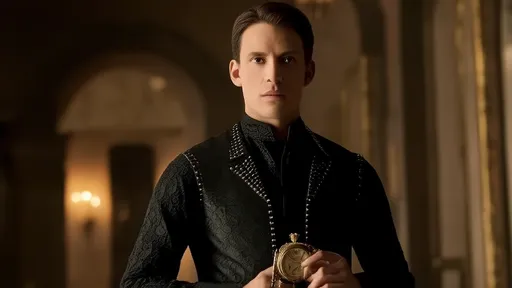
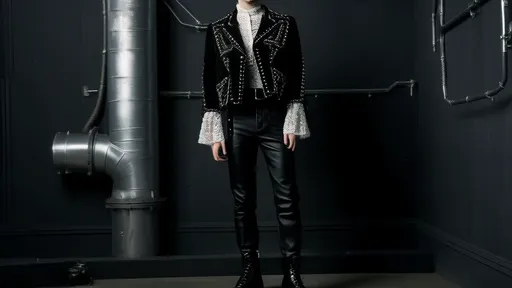
Gothic influences have long lurked in the shadows of fashion, but their return feels particularly potent now. The interplay of darkness and delicacy—embodied by lace—resonates in an era where self-expression is increasingly fluid. From runway shows to street style, the once-niche appeal of lace-trimmed shirts, embroidered jackets, and even lace-accented accessories has gained momentum. The aesthetic’s roots in Victorian mourning wear and Romantic-era drama lend it an air of timeless mystery, yet contemporary interpretations feel fresh, even urgent.
What’s striking about this revival is its defiance of traditional masculinity. Lace, historically associated with femininity or aristocracy, is being reclaimed as a symbol of power. Designers like Rick Owens and Alessandro Michele of Gucci have played pivotal roles in this shift, incorporating lace into collections that challenge conventions. Owens’ stark, monochromatic lace overlays evoke a medieval armor-like grandeur, while Michele’s baroque excesses revel in the fabric’s ornamental history. Their work underscores a broader cultural shift: masculinity is no longer defined by austerity but by the freedom to adorn.
Streetwear, too, has embraced the lace renaissance. Once dominated by graphic tees and hoodies, the scene now sees influencers pairing distressed denim with lace-insertion tops or layering sheer lace tunics over street staples. This fusion of high and low, gritty and graceful, speaks to a generation that rejects binary distinctions. Social media has amplified the trend, with platforms like Instagram and TikTok showcasing how lace can be both edgy and elegant. The hashtag #MensLace has become a hub for experimentation, proving that the fabric’s appeal spans subcultures.
Historically, lace’s journey in menswear is cyclical. In the 16th and 17th centuries, it was a marker of wealth and status among European nobility. Portraits of Louis XIV depict the Sun King swathed in lace cravats and cuffs, a testament to its regal associations. By the 19th century, however, the Industrial Revolution and shifting gender ideals pushed lace into the realm of the feminine. Today’s revival feels like a correction—an acknowledgment that beauty and craftsmanship transcend gender. Contemporary designers often reference these historical touchpoints, blending them with modern silhouettes to create pieces that feel both nostalgic and groundbreaking.
The craftsmanship behind lace also demands attention. Handmade lace, whether Chantilly or Venetian, involves painstaking labor, a fact that adds to its allure in an age of fast fashion. Luxury brands are leveraging this narrative, emphasizing the artistry behind their lace-trimmed creations. For consumers, wearing lace becomes a way to connect with tradition while making a statement about sustainability and slow fashion. This duality—old-world technique meets contemporary ethics—further fuels the fabric’s resurgence.
Celebrities and musicians have been instrumental in propelling lace into the spotlight. Figures like Harry Styles, Timothée Chalamet, and A$AP Rocky have all been spotted in lace-adorned ensembles, each offering a distinct take on the trend. Styles’ penchant for fluid, gender-neutral styling has made him a poster child for the movement, while Rocky’s streetwise glamour proves lace can be tough as well as tender. Their influence underscores how pop culture can redefine a material’s cultural weight, transforming it from niche to normative.
Critics might dismiss the trend as mere theatrics, but its staying power suggests otherwise. Lace’s return aligns with larger conversations about identity, authenticity, and the blurring of fashion boundaries. It’s no longer just about looking good—it’s about wearing one’s values, literally, on one’s sleeve. As Gothic aesthetics continue to permeate mainstream style, lace stands as a poignant emblem of this evolution: delicate yet defiant, historical yet fiercely modern.
The future of lace in menswear seems assured, not as a passing fancy but as a fixture. Designers are already pushing its potential, experimenting with technical fabrics that mimic lace’s intricacy or combining it with unexpected textures like leather and neoprene. The result is a dialogue between past and future, one that honors craftsmanship while embracing innovation. For the modern man, lace offers a way to articulate complexity—to be both bold and nuanced, fierce and refined. In this sense, its revival isn’t just about fashion; it’s about redefining what it means to be a man.
By /Aug 13, 2025

By /Aug 13, 2025
By /Aug 13, 2025

By /Aug 13, 2025
By /Aug 13, 2025

By /Aug 13, 2025

By /Aug 13, 2025

By /Aug 13, 2025
By /Aug 13, 2025

By /Aug 13, 2025

By /Aug 13, 2025

By /Aug 13, 2025

By /Aug 13, 2025

By /Aug 13, 2025
By /Aug 13, 2025
By /Aug 13, 2025

By /Aug 13, 2025

By /Aug 13, 2025
By /Aug 13, 2025
By /Aug 13, 2025
