In a groundbreaking fusion of celestial wonder and terrestrial artistry, scientists and artisans have unlocked the secrets of the cosmos to create an extraordinary new pigment: cosmic deep blue, derived from meteorite powder. This revolutionary development in mineral dyes promises to redefine the boundaries of color, sustainability, and human connection with the universe.
The discovery emerged from a decade-long collaboration between astrophysicists and master dyers, who sought to bridge the gap between interstellar matter and ancient dyeing techniques. By pulverizing iron-rich meteorites that have journeyed through space for millennia, the team developed a process to extract and stabilize the unique mineral compounds responsible for the pigment's mesmerizing depth.
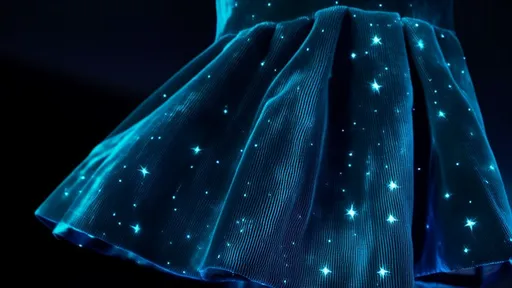
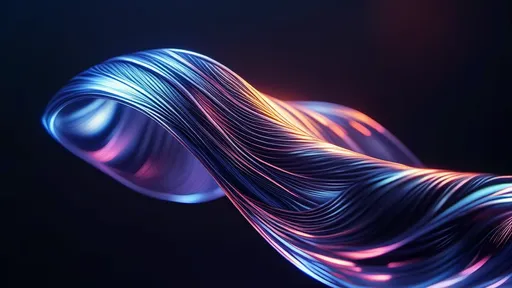
What sets this cosmic blue apart from traditional mineral dyes is its unparalleled chromatic complexity. Under different lighting conditions, the color shifts subtly, revealing hidden undertones that seem to mirror the vastness of space itself. Artisans describe the effect as "wearing a piece of the night sky," with the pigment capturing both the darkness of the void and the brilliant blues of distant nebulae.
The production process begins with carefully selected meteorites, each chosen for its specific mineral composition. After rigorous purification to remove any potentially harmful extraterrestrial materials, the meteorites are ground into an ultra-fine powder using specialized equipment that preserves the crystalline structures essential to the color properties. This powder then undergoes a series of alchemical transformations, combining ancient dye recipes with cutting-edge nanotechnology.
Environmental considerations played a crucial role in developing this new pigment. Unlike many synthetic dyes that rely on toxic chemicals, the meteorite-based colorant requires minimal processing aids. The entire production chain, from raw meteorite to finished dye, generates less than half the carbon footprint of conventional mineral pigments. This makes cosmic deep blue not just visually stunning, but also a sustainable choice for eco-conscious creators.
Early adopters in the fashion and art worlds have embraced the pigment with enthusiasm. Luxury fashion houses have incorporated it into limited-edition collections, where garments dyed with the space-derived color command premium prices. Contemporary artists, particularly those working in light-based installations, have found the pigment's unique reflective properties ideal for creating works that seem to change with the viewer's perspective.
Beyond its aesthetic applications, the development of meteorite-based dyes has sparked renewed interest in mineral pigments across multiple industries. Cosmetic companies are exploring its use in high-end makeup lines, while automotive manufacturers consider it for specialty paint jobs. The architectural community has taken notice as well, with several prominent designers specifying the pigment for accent walls and artistic installations in high-profile projects.
The cultural significance of this innovation cannot be overstated. For millennia, civilizations have looked to the stars for inspiration and guidance. Now, for the first time in human history, we can literally incorporate pieces of the cosmos into our daily lives. Textile artists working with indigenous communities have begun incorporating the pigment into traditional designs, creating a powerful symbolic bridge between earthly heritage and celestial origins.
Scientific analysis of the pigment has revealed fascinating details about its structure. The iron-nickel crystals present in the meteorites form unique nanostructures when processed, which interact with light in ways that cannot be replicated with terrestrial minerals alone. Researchers believe these properties could have applications beyond dyes, potentially leading to advances in optical technologies and light-filtering materials.
As with any rare material, challenges exist in scaling up production. Meteorites are, by their very nature, finite resources. The team behind the project has implemented strict ethical guidelines for sourcing, working only with legally obtained specimens and prioritizing fragments that would otherwise have little scientific value. They're also developing methods to extend the pigment's reach, creating concentrated versions that can be diluted without losing their distinctive qualities.
The economic implications are equally fascinating. A new market has emerged for "dye-quality" meteorites, with collectors and dealers now categorizing specimens not just by scientific interest but by their potential color yield. This has created unexpected opportunities for small-scale miners and meteorite hunters in remote regions, providing them with a new revenue stream for specimens that might otherwise go unnoticed.
Looking ahead, researchers are already experimenting with other types of extraterrestrial materials. Preliminary tests with lunar meteorites suggest the possibility of creating an entirely new palette of space-derived colors, from subtle grays to unexpected greens. Some visionaries in the field even speculate about one day harvesting asteroids specifically for their artistic potential, though such projects remain firmly in the realm of science fiction for now.
For consumers and creators alike, the emergence of cosmic deep blue represents more than just another color option. It embodies humanity's eternal fascination with the stars and our desire to make the inaccessible tangible. In an age where technology often distances us from the natural world, this innovation offers a profound connection to the universe beyond our planet - one that we can see, touch, and incorporate into the fabric of our lives.
The meteorite dye revolution challenges our perceptions of what's possible at the intersection of science and art. As this cosmic pigment begins its journey from laboratory curiosity to mainstream acceptance, it carries with it the promise of transforming not just our color palettes, but our very relationship with the materials that surround us. The night sky, it seems, has given us one of its most beautiful secrets - and in doing so, has opened a new chapter in the story of human creativity.

By /Aug 13, 2025

By /Aug 13, 2025

By /Aug 13, 2025

By /Aug 13, 2025

By /Aug 13, 2025

By /Aug 13, 2025

By /Aug 13, 2025
By /Aug 13, 2025

By /Aug 13, 2025

By /Aug 13, 2025

By /Aug 13, 2025

By /Aug 13, 2025
By /Aug 13, 2025

By /Aug 13, 2025

By /Aug 13, 2025

By /Aug 13, 2025
By /Aug 13, 2025

By /Aug 13, 2025

By /Aug 13, 2025

By /Aug 13, 2025
