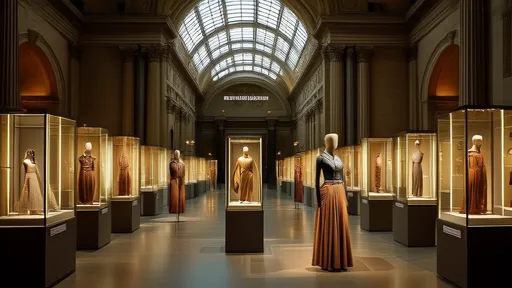
The Metropolitan Museum of Art has long been revered as a bastion of culture, housing some of the world’s most iconic artworks. But in recent years, the museum has expanded its influence far beyond its hallowed halls, venturing into the lucrative world of fashion licensing. The Met’s foray into fashion collaborations has sparked a fierce battle among brands vying for the prestige of associating with its illustrious name. This isn’t just about clothing—it’s about legacy, exclusivity, and the power of cultural branding in an increasingly competitive market.
The Met’s fashion licensing strategy is a masterclass in leveraging intellectual property. By partnering with high-end designers and retail giants, the museum has transformed its exhibitions into veritable trendsetters. The annual Met Gala, often dubbed "fashion’s biggest night out," serves as both a fundraising powerhouse and a global marketing spectacle. But behind the glitz lies a calculated business model: the Met licenses its name, imagery, and themes to select brands, creating limited-edition collections that sell out within hours. The allure isn’t just in the designs—it’s in the storytelling. Each collaboration is framed as a celebration of art history, giving consumers the chance to "wear a masterpiece."
What makes the Met’s approach unique is its curatorial selectivity. Unlike other institutions that license their IP broadly, the museum treats each partnership as a bespoke project. Recent collaborations with luxury houses like Gucci and Balenciaga were tied to specific exhibitions, ensuring the fashion lines felt like organic extensions of the art. This exclusivity drives demand to feverish levels. When the Met released a capsule collection inspired by its "Heavenly Bodies" exhibit, pieces resold for triple their retail price on secondary markets. The message is clear: a Met-approved design isn’t just apparel—it’s a collectible.
The competition for these partnerships has grown increasingly cutthroat. Fashion brands now submit elaborate proposals years in advance, often tailoring entire runway shows to align with upcoming Met exhibitions. Some industry insiders whisper about "backroom negotiations" where brands offer seven-figure donations to the museum’s Costume Institute in hopes of securing favor. The stakes are high because the rewards are higher: a successful Met collaboration can elevate a brand’s cultural cachet overnight. For smaller designers, it’s a golden ticket to mainstream recognition; for established houses, it’s a way to outmaneuver rivals in the prestige economy.
Critics argue this commercialization risks diluting the Met’s scholarly mission. Purists cringe at seeing Van Gogh’s sunflowers emblazoned on mass-produced handbags or Monet’s water lilies reduced to a sneaker print. Yet the financials are undeniable—the museum’s licensing revenue has grown exponentially, funding acquisitions and conservation efforts that might otherwise face budget cuts. In many ways, the Met has rewritten the playbook for how cultural institutions can thrive in the 21st century: by treating their IP not just as heritage to preserve, but as equity to invest.
The ripple effects of this strategy are reshaping the broader museum landscape. Institutions from the Louvre to the British Museum are now racing to establish their own fashion licensing programs, though none have matched the Met’s alchemy of art and commerce. What the Met understood early was that in today’s experience economy, people don’t just want to see art—they want to inhabit it. Whether this represents the democratization of culture or its commodification remains hotly debated. But one thing is certain: the battle for museum IP has only just begun, and the Met remains several moves ahead.

By /Aug 13, 2025
By /Aug 13, 2025
By /Aug 13, 2025

By /Aug 13, 2025
By /Aug 13, 2025

By /Aug 13, 2025

By /Aug 13, 2025
By /Aug 13, 2025
By /Aug 13, 2025

By /Aug 13, 2025

By /Aug 13, 2025

By /Aug 13, 2025

By /Aug 13, 2025

By /Aug 13, 2025
By /Aug 13, 2025
By /Aug 13, 2025
By /Aug 13, 2025

By /Aug 13, 2025

By /Aug 13, 2025
By /Aug 13, 2025
