In a groundbreaking development for sustainable fashion, scientists have unveiled a revolutionary self-healing denim technology that could forever change how we deal with worn-out jeans. The innovation centers around microcapsule repair systems embedded within the fabric itself, offering what experts are calling "the holy grail" of textile durability.
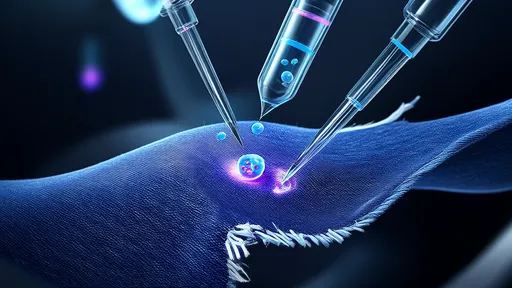
The technology works through microscopic capsules containing specially formulated polymers and dyes that remain dormant until activated by friction or heat. When a tear occurs, these capsules rupture and release their contents, which then interact to form a seamless repair. What makes this particularly remarkable is that the healing process mimics the original indigo dye and fabric texture, making repairs virtually undetectable to the naked eye.
Dr. Elena Rodriguez, lead researcher at the Textile Innovation Institute, explains: "We've moved beyond simple coatings or surface treatments. These microcapsules are integrated at the fiber level during the spinning process, meaning the self-repair capability is built into the very structure of the fabric. After three years of development, we've achieved repair cycles that can withstand up to 50 washes without losing effectiveness."
Fashion industry analysts predict this technology could reduce textile waste by up to 30% in the denim sector alone. With approximately 1.2 billion pairs of jeans produced globally each year - many discarded due to knee blowouts or thigh gaps - the environmental implications are substantial. The microcapsule solution addresses not just sustainability but also economic factors, potentially extending the lifespan of premium denim by years.
Early adopters include several major denim brands preparing to launch "self-healing" collections next season. Production challenges remain, particularly in scaling the technology while maintaining cost competitiveness with conventional denim. However, manufacturers report that consumer willingness to pay a 15-20% premium for longer-lasting jeans makes the business case compelling.
Beyond commercial applications, the military has expressed keen interest in the technology for durable uniforms. Field tests showed microcapsule-embedded fatigues could self-repair minor tears caused by brush or debris during operations. This unexpected crossover application has led to increased research funding from defense departments in three countries.
Critics question whether self-repairing fabrics might discourage recycling initiatives or create new challenges in textile biodegradability. The research team acknowledges these concerns but emphasizes that their polymer formula breaks down under industrial composting conditions. "We're not creating indestructible plastic jeans," assures Dr. Rodriguez. "The goal is responsible durability - giving garments enough longevity to justify their environmental footprint, without creating permanent waste."
As the technology matures, researchers are exploring adaptations for other fabrics like wool and synthetic blends. The microcapsule approach shows particular promise for outdoor gear and workwear where abrasion resistance is crucial. Some prototypes even incorporate temperature-sensitive capsules that adjust insulation properties in response to weather changes.
The denim industry's embrace of this innovation marks a significant shift from traditional approaches to garment longevity. Where previous solutions focused on reinforcement or patching, this biochemical approach represents a fundamental rethinking of textile design. As one industry insider noted: "We're not just making stronger jeans - we're teaching denim to heal itself, just like skin."
Consumer trials beginning next month will test real-world performance across different climates and body types. Early participants describe the experience as "uncanny" - watching small holes disappear after wearing the jeans through a normal day's activities. This psychological dimension of "living fabric" may prove as influential as the technological breakthrough itself.
With patents pending in 17 countries and fast-tracked sustainability certifications in the EU, self-healing denim appears poised to transition from laboratory curiosity to retail reality. As fast fashion faces increasing scrutiny, such innovations offer a potential middle ground between disposable clothing and impractical "forever" garments. The true test will come when these jeans meet their most demanding critics: teenagers and manual workers.

By /Aug 13, 2025

By /Aug 13, 2025

By /Aug 13, 2025

By /Aug 13, 2025

By /Aug 13, 2025

By /Aug 13, 2025

By /Aug 13, 2025

By /Aug 13, 2025
By /Aug 13, 2025
By /Aug 13, 2025
By /Aug 13, 2025

By /Aug 13, 2025

By /Aug 13, 2025
By /Aug 13, 2025

By /Aug 13, 2025

By /Aug 13, 2025

By /Aug 13, 2025

By /Aug 13, 2025

By /Aug 13, 2025

By /Aug 13, 2025
